
5. Stroking (Mo)
1. Definition
Apply the palm surface or the aligned finger surfaces of the index, middle, and ring fingers to adhere to the acupoint or body area, and perform active, circular, rhythmic stroking movements with the wrist joint.
2. Types
Four-Finger Stroking (Sizhi Mo)
A method of circular stroking (Mo) performed with the pads of the index, middle, ring, and little fingers working together in coordination.
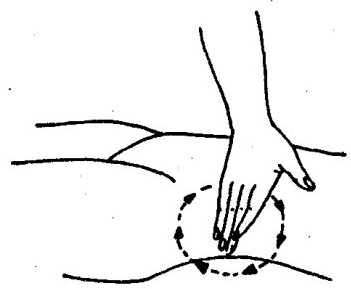
Four-finger Rubbing Manipulation
Thenar Eminence Stroking (Mo)
Method of pressing the thenar eminence firmly against a specific area on the patient’s body surface and performing circular movements.
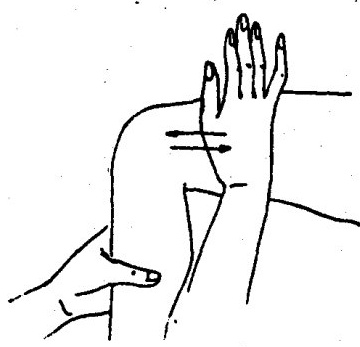
Thenar Eminence Rubbing Manipulation
Hypothenar Stroking (Xiaoyuji Mo Fa)
Using the hypothenar eminence (the ulnar side of the palm) to adhere to a specific area on the body surface, and perform rhythmic linear or circular movements centered at the wrist joint together with the forearm. This describes the Rolling (Gun) technique.
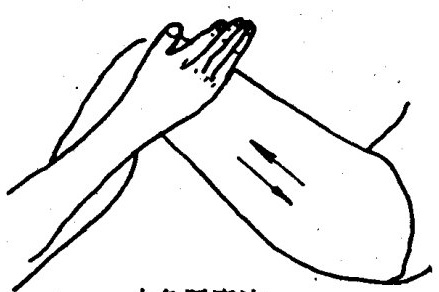
Hypothenar Eminence Rubbing Manipulation
Palm Stroking (Zhang Mo)
With the palm pressed firmly on the treatment area, perform rhythmic circular stroking movements driven by the wrist joint together with the arm.
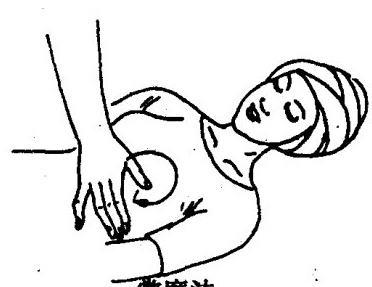
Palm Rubbing Manipulation
3. Key Points
(1)The manipulating area must maintain close contact with the treated area.
(2) The downward pressure is less than the force of the circular manipulation.
(3) Frequency: approximately 50–160 times per minute.
4. Location
Applicable to the head and face, neck, trunk, and limbs, etc.
5. Action
Harmonizing the Middle and regulating Qi, eliminating accumulations and guiding stagnation, activating Blood and dispelling stasis, and other effects.
6.Wiping (Mofa)
1. Definition
Using the finger pads (whorled surface) or palm of one or both hands, press firmly against the skin and apply force to perform pushing movements in vertical, horizontal, arc, curve, or any back-and-forth directions.
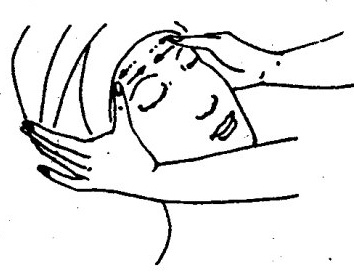
Stroking Manipulation
2. Types
Finger-Wiping (Zhi Mo)
Use the thumb pads of both hands to maintain close contact with the skin and perform a pushing motion in straight lines or arcs.
Palm Wiping (Zhangmo)
Using the palm of the hand pressed closely against the skin, push in a straight or curved line (Rubbing method / Ca).
3. Essentials
(1) Apply even force and gentle movements during operation to prevent skin injury.
(2) When performing stroking (Mo) on the head and face, the movements should be continuous and uninterrupted, executed in one smooth motion.
(3) When working on the palm, hold the patient’s hand with both hands, and use both thumbs to repeatedly push and wipe in opposite directions—either vertically or horizontally—in a cross pattern.
4. Location
Head and face, neck, palm, chest and abdomen, etc.
5. Action
Open the orifices and awaken the brain, clear the head and brighten the eyes, harmonize the middle and regulate qi, and dilate blood vessels.
7.Vibrating (Chan)
1. Definition
A manipulation technique where the fingers or palm are firmly attached to the treatment area and perform rapid, dense vibrating-trembling movements.
2. Types
Thumb Vibrating (Muzhi Zhenchan)
A method of rapidly vibrating the thumb or middle finger on the treatment area.
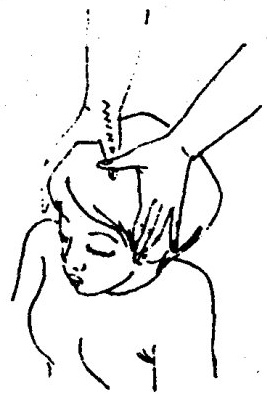
Thumb Vibrating Manipulation
Palm Vibration (Zhangchan)
A method of applying rapid vibration by pressing with a single palm or stacked palms on a specific area of the recipient’s body surface.
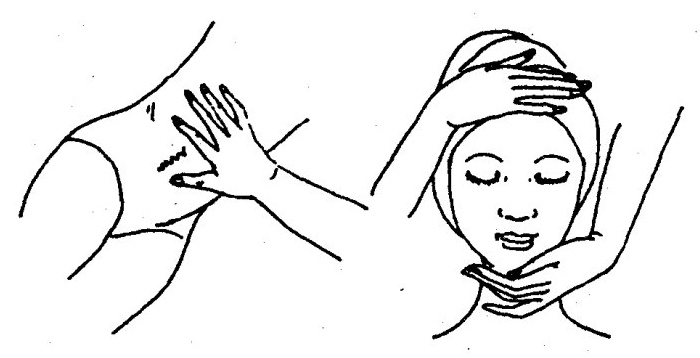
Palm Vibrating Manipulation
3. Key Points
Using the tip of the thumb or middle finger, press on the treatment area with force generated from the finger, then perform continuous, rapid vibrations with coordinated force, maintaining an appropriate balance of tension and relaxation.
4. Location
Chest and abdomen (thoracoabdominal region).
5. Actions
Promote digestion and relieve stagnation, invigorate blood and resolve stasis, and dispel stasis to alleviate pain.
8. Patting (Paida)
1. Definition
A technique of patting the treatment area with a hollow palm in a steady and rhythmic manner.
2. Types
Naturally bring the fingers together, slightly flex the metacarpophalangeal joints, and lightly tap the treatment area with the index, middle, and ring fingers.
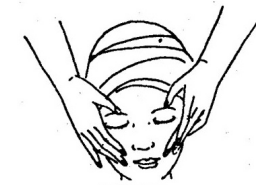
Tapping Manipulation
3. Key Points
(1) During operation, keep the fingers naturally together and pat the treated area in a steady, rhythmic manner.
(2) The manipulation should be light, primarily applied to the cheek area, and tapping should be performed naturally and rhythmically in accordance with the skin’s elasticity.
(3) The manipulation should be performed in sequence, with elasticity and rhythm.
4. Location
The head and face, neck and shoulders, back, arms, and legs.
5. Actions
Harmonize Qi and Blood, relax tendons and activate blood circulation, expel Wind and dissipate Cold, and relieve fatigue.
9. Rubbing (Ca)
1. Definition
A technique in which the fingers or palm are applied to a specific area on the body surface and perform linear, back-and-forth rubbing movements — known as Rubbing (Ca).
2. Types
(1) Palm Rubbing (Zhangca)
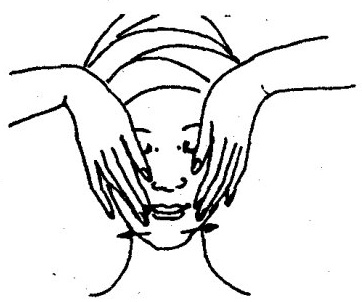
Palm Rubbing Manipulation
Use the palm to perform Rubbing (Ca) on the patient’s skin.
(2)Thenar Rubbing (Ca)
A method of applying friction (Ca) to the patient’s skin using the thenar eminence.
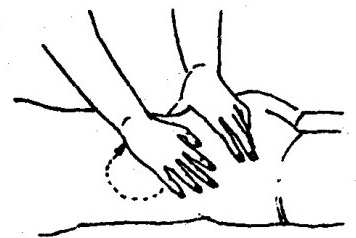
Thenar Eminence Rubbing Manipulation
(3) Hypothenar Rubbing (Ca)
A method of rubbing (Ca) performed on the patient’s skin using the hypothenar eminence.
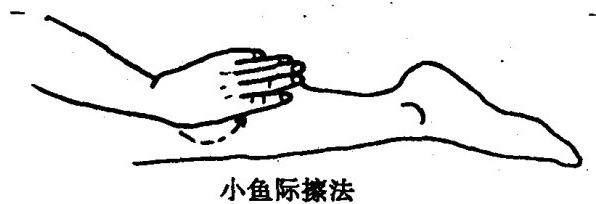
Hypothenar Eminence Rubbing Manipulation
3. Key Points
(1) The manipulation should be performed in close contact with the patient’s skin, generating a certain degree of heat during the motion. The back-and-forth distance should be long, without jumping or pausing.
(2) Exert force steadily, continuously and evenly. Do not hold your breath; keep your breathing natural.
4. Location
Head and face, shoulders and back, limbs, lumbosacral region, both sides of the spine, chest and abdomen.
5. Actions
Soothe the Chest and Regulate Qi, Warm and Unblock the Meridians, Invigorate Blood and Dispel Stasis, Regulate the Spleen and Stomach.
10. Shaking (Dou)
1. Definition
Use one hand or both hands to hold the distal end of the affected limb, and apply continuous, small-amplitude, rapid up-and-down vibrating motions with gentle force. This is the Shaking manipulation (Doufa) in Tuina.
2. Types
(1) Pulling and Shaking (Ladou)
The practitioner uses both hands: the thumb, index, and middle fingers grasp the distal forearm of the patient’s limb; the ring and little fingers along with the thenar eminence hold the wrist area, with the palms facing downward. The shoulder is lifted 60° forward and outward, followed by continuous up-and-down shaking motions.
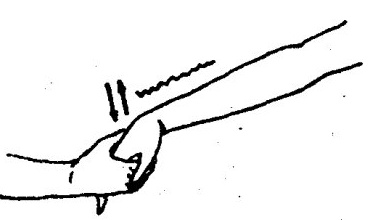
Pulling Shaking Manipulation
(2) Lifting and Shaking Manipulation (Tidoufa)
A technique in which the practitioner holds a part of the patient’s limb or skin with both hands and performs lifting and shaking (Ti Dou).
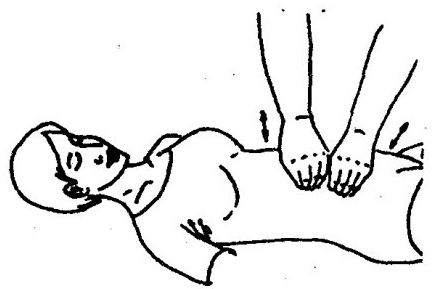
Lifting Shaking Manipulation
(3) Traction and Shaking (Qiandou Fa)
The practitioner holds the distal end of the limb and performs wave‑like shaking while simultaneously applying traction (pulling and stretching).
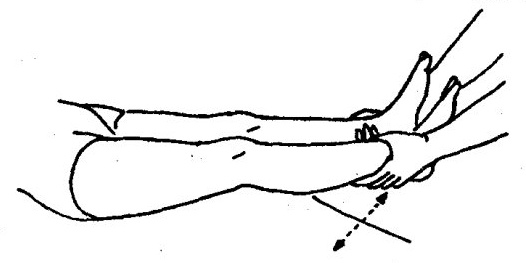
Traction Shaking Manipulation
3. Key Points
Use the distal end to drive the proximal end, shaking and moving in a gentle, moderate manner—avoid applying excessive force.
4. Location
Limbs and abdomen.
5. Actions
Transform stasis and disperse accumulations, invigorate blood and stop pain, regulate the middle (Spleen-Stomach) and rectify qi, resolve stasis and dredge stagnation, release adhesions, unblock and benefit the joints, smooth and gently knead the sinew channels.
Interesting! I’ve heard about facial gua sha but never knew there was a specific “stroking” technique using the palm and fingers. Does the direction of strokes matter for lymphatic drainage or just circulation? Would love to try this at home.
Interesting! I’ve been trying to learn more about facial gua sha, but this “stroking” technique sounds like a gentler alternative. Definitely going to practice the four-finger method—any tips for getting the rhythm right?
I’ve always been curious about the different techniques in facial massage! The description of stroking (Mo) sounds so soothing – especially the circular wrist movement. Does this help with lymphatic drainage or just relaxation? Would love to try it next time I do my skincare routine!