Moxibustion is a traditional therapy that treats and prevents diseases by applying thermal stimulation to acupoints and specific body regions. The primary material used is moxa wool, which is processed into cone-shaped moxa or roll-shaped moxa sticks.
Moxa wool is produced from dried mugwort leaves (Artemisia vulgaris). The leaves are finely ground, with thick stems discarded. It works to warm and unblock the meridians, dispel cold and dampness, and restore the physiological functions of internal organs.
To make moxa cones, take a small quantity of moxa wool and knead it into a cone using the thumb, index and middle fingers. Common sizes range from a wheat grain, a jujube pit, to the tip segment of a thumb.
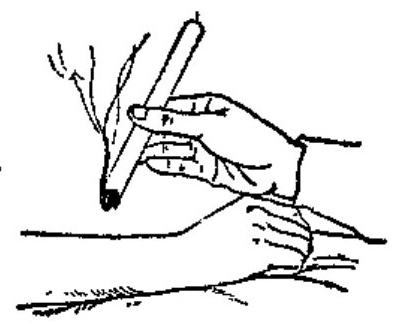
Moxa sticks are more user-friendly than moxa cones. They are crafted by rolling moxa wool into a cylindrical shape wrapped with mulberry bark paper, resembling large cigarettes. They allow for simpler and more convenient thermal application on acupoints.
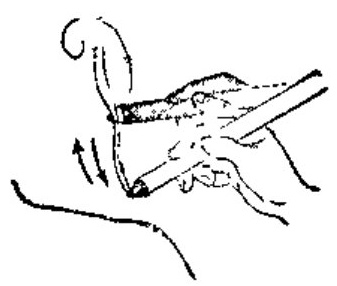
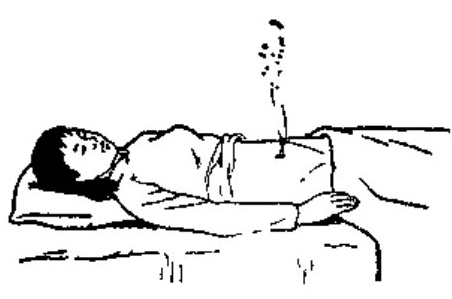
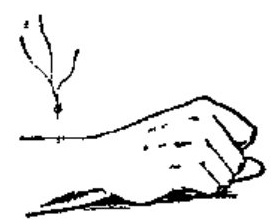
Clinically, moxibustion is divided into three major categories: cone moxibustion, stick moxibustion and needle-warming moxibustion (See Figures 9, 10, 11 and 12).
Cupping Therapy
Cupping therapy uses small cups to create negative pressure on the skin for therapeutic effects. A vacuum is formed inside the cup by placing an ignited alcohol-dampened cotton ball within the vessel. Cups are commonly made of bamboo or glass and available in multiple sizes; their edges must be flat and smooth.
Indications
This therapy is applied for rheumatism, joint pain, soft tissue sprains, facial paralysis, asthma and other related conditions.
Operation Steps
Use forceps to hold a cotton ball soaked in 95% alcohol and ignite it. Insert the burning cotton ball briefly into the cup, then quickly withdraw it and place the cup firmly onto the target skin area. Leave the cups in place for 10 to 15 minutes to maintain suction.
To remove a cup: steady the vessel with one hand, and press the skin gently at the cup rim with the other hand to let air in. The negative pressure will release, and the cup can be lifted off easily.
Precautions
Cupping is contraindicated for patients with high fever, convulsions, allergic skin disorders, generalized edema or bleeding disorders. It is also prohibited over the abdomen of pregnant women.
Skin congestion and bruising are normal post-treatment reactions and will fade naturally within several days. Minor blisters usually resolve spontaneously in one to two days. For large blisters, drain the fluid using a sterile syringe, apply gentian violet topically, then cover the area with a sterile dressing.